The Club Nobody Asked to Join
|
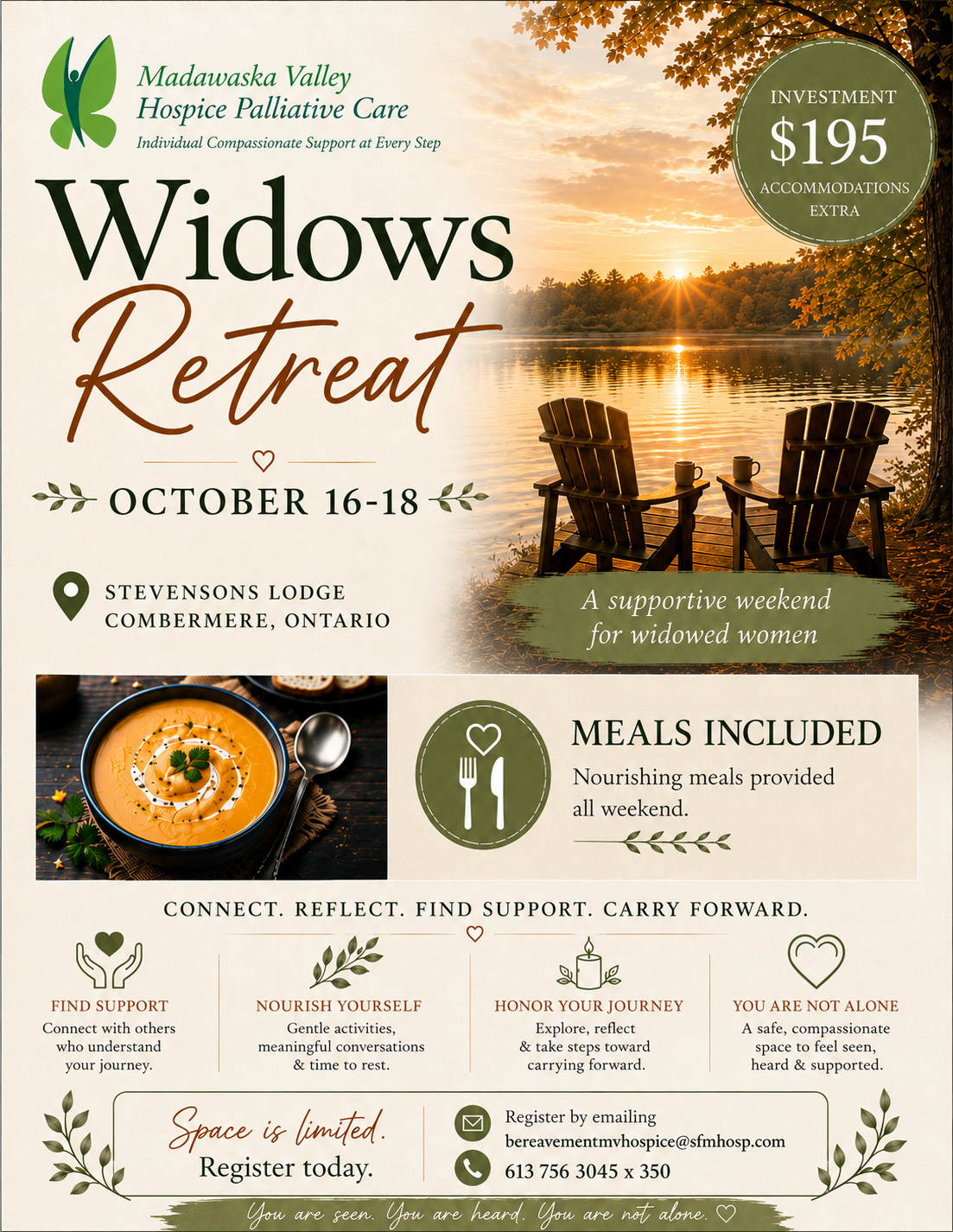
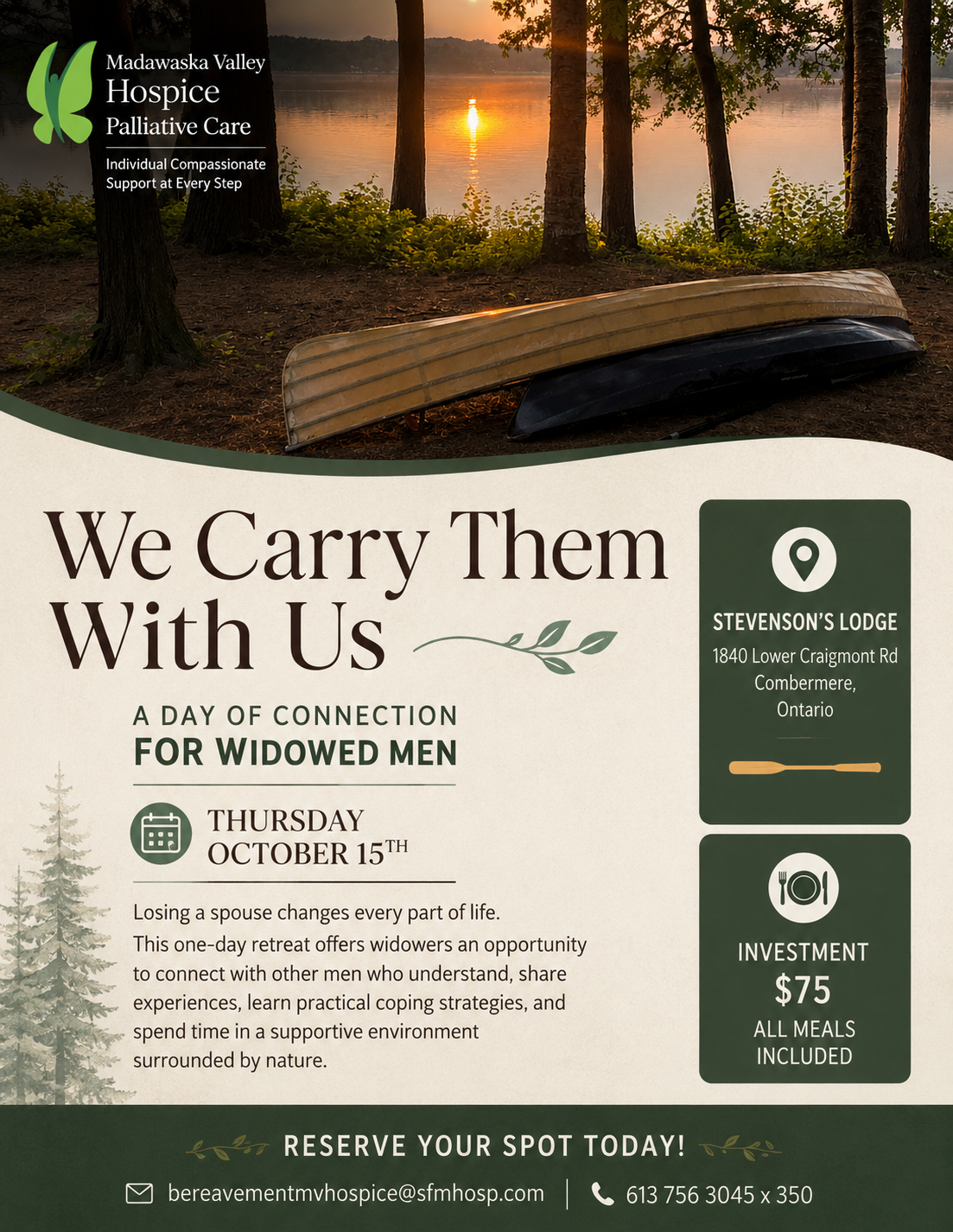
By Jenna Stamplicoski, Thanatologist and Bereavement Services Coordinator, Madawaska Valley Hospice Palliative Care When your spouse dies, of course you grieve the person you love. But it doesn't take long to realize you are grieving a whole lot more than one person. In grief work, we call these secondary losses. Even if you have never heard that term before, I know the losses themselves have been screaming at you. It's the first time you show up somewhere alone. The first invitation that comes with only your name on it. It's standing in the kitchen trying to make the thing they always made, or staring at something that needs fixing and realizing you have absolutely no idea who they used to call. It's suddenly doing the banking, cutting the grass, driving somewhere they always drove, or taking on whatever role belonged to them for years. Sometimes those losses are much quieter. You hear something funny and reach for your phone. You walk into the house and there is nobody to tell about your day. You go to a wedding and notice the empty chair beside you. You fill out a form and get to emergency contact. Your routines change. Your finances might change. Friendships can change. Plans you made for retirement, travel or simply growing older together suddenly look different. You can even find yourself wondering who you are now that you aren't part of a couple anymore. That is a lot of change to carry while you are also grieving someone you love. In a rural community, finding support for all of that isn't always easy. We may have fewer grief services to begin with. The program you need might be an hour away. Maybe you don't drive, don't like driving at night, or don't want to make a two hour round trip for a one hour appointment. A grief group may only run once or twice a year. Sometimes you don't even know what is available because services are scattered across different communities and organizations. In a small town, privacy can feel a little different too. You may know the person providing the service, know their family, or run into them at the grocery store next week. Then there are barriers that have nothing to do with kilometres. Not everybody wants to sit in a circle and talk about their feelings. Not everybody thinks of themselves as someone who “needs help.” Some people would rather talk while walking, fishing, working in the garage or drinking coffee. Some want information. Some want a counsellor. Some aren't ready for any of it yet. Grief support doesn't have to look one particular way, and I think we need to get better at offering people more than one way through the door. If your spouse has died, look around and ask what is available. Your local hospice is a good place to start, and you often don't need to have had any previous connection with hospice to access bereavement support. Look in neighbouring communities too. Ask your family doctor, community centre or library what they know about. Online programs can help when distance is a barrier. A grief group, a retreat, a community program or even coffee with another widowed person might be where you find your people. Finding that support isn't always easy, but the interesting thing about many rural communities is that there are a lot of older widowed adults living right alongside us. Your community is there. Sometimes you just have to be brave enough to find it. You don't have to tell your whole story the first time you walk through the door. You don't have to become best friends with everyone. You can just show up and see how it feels. And if you know someone whose spouse has died, keep inviting them. Keep checking in after the funeral is over and everyone else has gone back to their regular lives. Ask them for coffee. Invite them to supper. Offer to help with the job their spouse always did. Don't assume they aren't interested because they said no the first few times. Give them room to decide what they need and when they need it. Widowhood is a club nobody asked to be part of, but unfortunately, it's a pretty big club. Nobody else had your marriage, your person or your exact grief, but there are people who understand a lot of what you are trying to figure out. Being surrounded by people who get it can be incredibly validating. It can help you cope and remind you that you aren't the only person trying to figure out this strange new life. We can't fix grief, and that isn't the goal anyway. But we can make sure you don't have to do all of it alone. Madawaska Valley Hospice Palliative Care is trying to create more of those opportunities for connection close to home. This October, we are hosting two grief retreats at Stevenson’s Lodge in Combermere: a one day retreat for widowed men and a weekend retreat for widowed women. They are simply another way for people to come together, learn a little about grief, share as much or as little as they want, and spend time with others who understand something about life after the death of a spouse. You don’t need to have had any previous connection with hospice to attend. If it sounds like something that might be helpful for you, or for someone you know, email us at [email protected] to learn more.
|